

Calories and Sleep Measurement Errors: A Vulnerability Threatening Smartwatch Giants
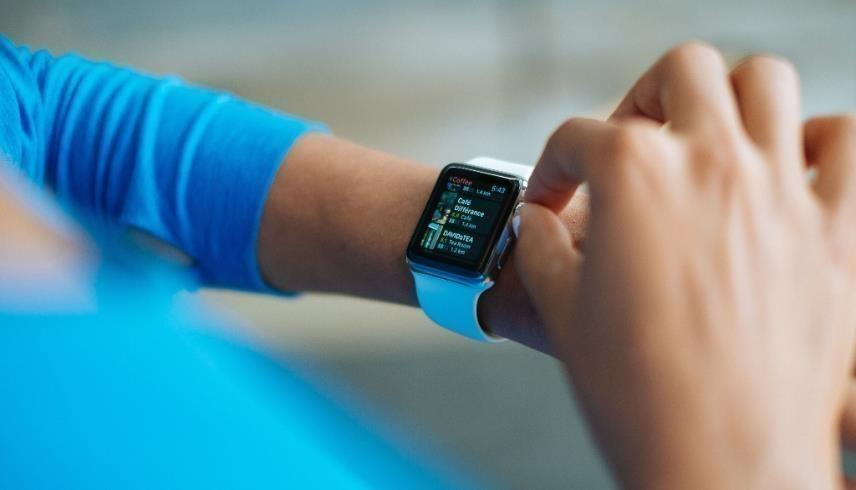
Technology companies market smartwatches as around-the-clock health-monitoring tools, turning heart rate, sleep duration, blood oxygen levels, and physical activity into data that gives users a sense of control over their health.
Companies have spent years increasing the number of sensors inside wearable devices, but it has ultimately become clear that the real challenge lies in the quality of the data produced by those sensors, rather than in their number.
Yet the path from a pulse detected by a sensor to a number displayed on the screen is not straightforward. Devices rely on algorithms to analyze the data and derive health indicators that can carry a margin of error.
In a recent study that tested four watches from Apple, Garmin, Samsung, and Fitbit, the devices were found to overestimate calories burned during exercise by between 15% and 25% compared with laboratory metabolic measurements. The margin of error was higher among people with obesity.
In tests of the Google Pixel Watch 3, the difference between the watch’s estimate and the laboratory reference measurement ranged from 73 fewer calories to 56 more calories, while the average percentage error was 15.02%.
Accurate Estimates… But!
The accuracy of wearable devices appears to be better for some metrics. Heart-rate measurements, for example, may deviate by no more than ±3%, while errors in assessing physical-activity intensity can reach 80%.
Sleep tracking, meanwhile, relies on estimates based on body movement and other signals rather than direct measurement of sleep. As a result, a smartwatch’s estimate of sleep duration and sleep stages may differ from measurements produced by medical sleep-monitoring equipment.
Even step counts, one of the simplest metrics displayed by smartwatches, are not completely fixed figures. Where the device is worn, the algorithm used, and the nature of the movement can all affect the result.
Who Is Looking for Accuracy?
Technology expert Sami Abdalnour told 24 that the importance of accuracy varies depending on the type of user.
For people who rely on a device for medical purposes, the accuracy of data and measurements becomes a fundamental factor, alongside the ability to connect the device with doctors and other services, review historical data, and provide comprehensive health plans.
Users who purchase a device to improve their lifestyle, on the other hand, tend to place greater importance on price, design, the number of features, app usability, and the overall user experience. Meanwhile, users motivated primarily by fashion and trends may care more about a product’s popularity and market presence than the accuracy of its data.
Asked whether the accuracy of readings and measurements could become a factor consumers use when making purchasing decisions, much like they currently compare battery life, camera quality, and processor speed, Abdalnour said this is already possible.
He noted that as prices, user experiences, designs, and smartphone integration become increasingly similar among competing products, measurement accuracy is emerging as one of the key areas of competition, alongside after-sales service.
He added that greater consumer awareness and the use of wearable devices to monitor health-related indicators are increasing the importance of choosing a device that provides accurate data. However, identifying the most trusted brand may require consumers to try more than one device before settling on a particular option.
Who Will Win the Competition?
Dr. Osama Mostafa, a technology and information-security expert, points out that companies have spent years increasing the number of sensors inside wearable devices. Ultimately, however, it has become clear that the real challenge lies in the quality of the data generated by those sensors, rather than their quantity.
Speaking to 24, Mostafa stresses that the companies that succeed in the future will be those that demonstrate their data can be verified, rather than those that simply add another sensor every year.
“Xiaomi, for example, established a 5,000-square-meter laboratory to improve accuracy and announced improvements of 17% in calorie-counting accuracy and 15% in VO₂ max accuracy. That’s a major investment in proving accuracy, rather than simply adding more sensors,” he said.
The technology expert emphasized that the next challenge for technology companies is to move from “What are we measuring?” to “How accurately are we measuring it?”
He explained that consumers, according to the available data, are beginning to recognize that accuracy is not a luxury but a value they are willing to pay for.
As he put it, the company that proves its accuracy first will earn users’ trust, while those that avoid demonstrating the accuracy of their measurements risk remaining in the category of “electronic gadgets” rather than trusted health tools.
Source: 24