

AI Shields Production Lines from Failures: How Can Factories Benefit?
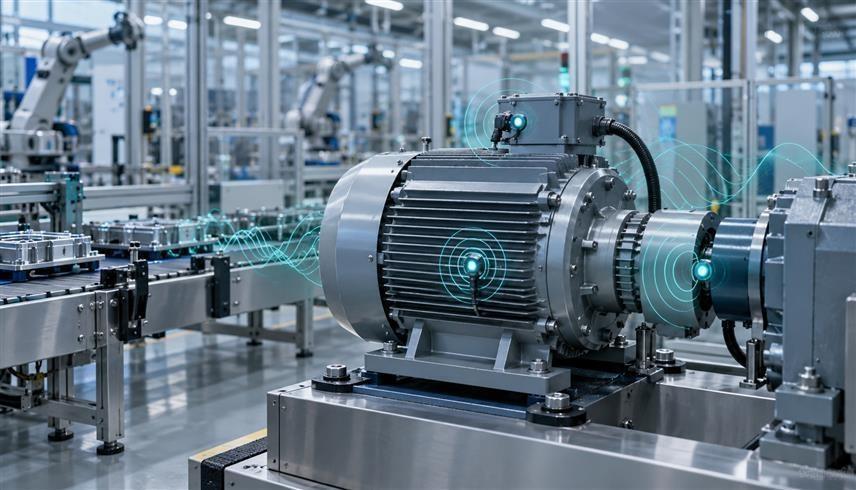
Losses from an hour of unplanned production downtime can reach $500,000 at some facilities, according to a report by technology and engineering group ABB in partnership with research firm Sapio Research. The findings are based on a survey of 3,600 decision-makers across 14 industries in 18 countries. Faced with these losses, factories are increasingly turning to artificial intelligence to monitor equipment and predict failures before they bring production lines to a halt.
The “Modernization for Resilience” report found that 83% of respondents from countries including Saudi Arabia, Sweden, the United States, China, and Germany estimated the minimum cost of one hour of production downtime at around $10,000. Meanwhile, 76% said losses could reach $500,000, while 7% estimated they could exceed that figure. The global average was approximately $169,900 per hour.
The survey was conducted in July 2025, according to ABB, a Zurich-based company operating in electrification, industrial automation, drive systems, and asset monitoring. It included executives responsible for operations, maintenance, engineering, and investment decisions across sectors including energy, oil, gas, mining, metals, chemicals, utilities, water, transportation, and food and beverage.
The costs of equipment failures extend far beyond repair expenses. They can also include lost production, wasted materials and energy, delayed deliveries, and labor costs incurred while operations are halted.
Monitoring Before Failure
These losses have encouraged factories to move from repairing equipment after it breaks down to predictive maintenance, which relies on sensors to monitor temperature, vibration, pressure, energy consumption, and performance levels.
Technology expert Sami Abdalnour says AI analyzes data generated by equipment and compares it with historical failure and maintenance records to identify abnormal patterns and automatically issue alerts before a minor warning sign develops into a costly failure.
He explains that the data can help factories answer direct operational questions: “What is happening now? What is likely to happen? When should we intervene? And which team is best suited to carry out the maintenance?” The system can also analyze previously implemented solutions and measure their impact on equipment performance.
Unlike preventive maintenance, which is carried out according to a fixed schedule, a predictive system determines when intervention is needed based on the equipment’s actual condition. According to IBM, the use of AI can reduce production downtime by between 35% and 45% and lower maintenance costs by approximately 25% to 30%, although results vary depending on the facility and the quality of implementation.
The Implementation Gap
However, access to the technology does not automatically translate into benefits. Although 95% of industrial leaders are familiar with the stages of the equipment life cycle, only slightly more than half have a proactive strategy for modernization. Meanwhile, 33% of facilities have not carried out any projects to modernize motors and drive systems over the past two years, according to ABB.
The report identified budget constraints, skills shortages, and uncertainty over return on investment as some of the main barriers to equipment modernization and the adoption of proactive maintenance.
Skills Determine the Results
The scale of investment is also reflected in Rockwell Automation’s “State of Smart Manufacturing 2025” report. According to the report, 95% of 1,560 executives across 17 countries said their companies had invested or planned to invest in artificial intelligence and machine learning over the following five years. However, around half identified the ability to implement the technology as a highly important skill.
Abdalnour believes that the value of such a system is not determined by its ability to issue alerts alone, but by whether a team is capable of interpreting those alerts, determining the priority of a potential failure, and taking the appropriate action.
An alert that is not connected to a rapid operational decision will not prevent production downtime.
Source: 24