

Unsolicited AirDrop Notifications Violate Other People’s Privacy
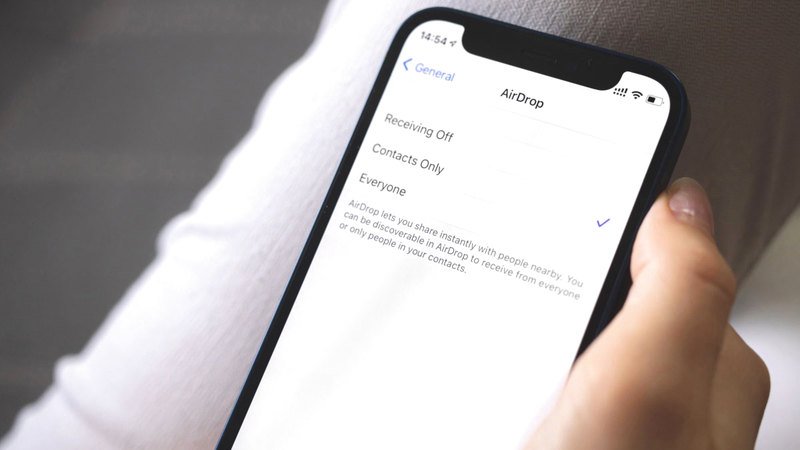
Experts on the misuse of Bluetooth's smartphone data transfer service, AirDrop, warned that entertainment is driving some people to use cutting-edge technologies in illegal ways by sending malicious videos or photos, as well as using them to send the sender's social media number or photo, in order to identify others.
They pointed out that many people receive notifications via their smartphones while in public places, sent by people with pseudonyms, including annoying phrases or inappropriate pictures.
They insisted that this technique violated the privacy of others, placing the perpetrator under the rule of law.
Citizenship Craftsman said: The features of smartphones and social networking apps have multiple uses, and people can use them to entertain and annoy others.
She added that she uses the "AirDrop" feature to send files and images from her smartphone to other devices of her own, making it easier for her to transfer files in a short time, but she is bothered by frequent notifications from people in public places, containing photos and messages, which drives her to disable everyone's access to them, explaining that "it is possible to completely stop annoying messages if the person prevents others from accessing them".
Citizen Ali al-Muzrahi said that he receives frequent notifications when he is in a public place, such as shopping malls or parks, warning "people who send notifications randomly from exposing themselves to exploitation, because they have put themselves in the hands of unknown persons".
Mother Mohammed said: "The issue of receiving AirDrop notifications is up to the individual if he or she is an adult and understands the consequences of receiving photos or videos. And for teenagers who don't get enough awareness from their parents, it may open a door to exploitation, asserting that teenagers' curiosity may make them more likely to respond to these notifications.
She added that she was surprised, finally, by a terrifying video that someone sent via AirDrop for laughs, adding that she did not know the identity of the sender, nor did he know the identity of the recipient, "but this joke is definitely not appropriate for children".
For his part, the technical expert, Sami A Nour, reported that laws, and ongoing awareness from specialists, prohibit the use of smartphone technology to disturb others. He added that people who use these technologies for entertainment at the expense of others are holding themselves accountable, because they can be reached if they file a complaint against them, even if they use aliases. He stressed that the best way to deal with annoying messages via AirDrop in order to prevent harm from happening to them is to "adjust the privacy settings on smartphones, and prevent the public from sending any clips or pictures, To bridge the gap in privacy that is being exploited by harassed people".
The lawyer and legal adviser, Asma Baluchi, said: "The UAE legislator has been working since the beginning of the digital transformation to provide a secure digital environment, and to ensure cybersecurity for all individuals on state soil, pointing to the issuance of a set of laws aimed at tackling all cybercrimes committed in e-space, and everything new in the field of information technology crimes.
She pointed out that AirDrop, which is used to quickly send photos and documents as soon as Wi-Fi is turned on, is one of the modern ways that some individuals use to commit cybercrimes against recipients, such as exposing a female to a scratching face, or bullying. And I affirmed that anyone who is exposed to a cybercrime committed through cyberspace, computers and networks within the state can report through a range of smart platforms dedicated to receiving this type of information, confirming access to the offender.
The lawyer and legal adviser, Ibrahim Hosni, said that UAE law regulated the process of wireless and telephonic communication through clear legal provisions, with the aim of regulating the telecommunications sector, stressing that the law punishes the recipient of annoying messages that violate privacy with imprisonment for not more than one year and a fine of not less than 50 thousand dirhams and not more than 200 thousand dirhams or one of these two penalties.
Annoying messages .
Legal adviser, Ibrahim Hosni, stressed that some people exploit modern technology, sending annoying or offensive messages with their folds full of gossip and others, explaining that these technologies give them freedom of expression and freedom of action but that this freedom must stand when it hurts others.
He added that people who abuse this feature may complain that the recipient has allowed them access to their internet range, which is from the phone settings, but that doesn't allow them to violate the privacy of others. This service deals with social media accounts that send private messages that are offensive, violent or racist.
He said that some people who send disturbing videos or text messages in a certain geographic area think they're anonymous and inaccessible, as their true identities are invisible, which is not true, because there's a section that specializes in cybercrime, which includes specialized people who can scan the message, and identify the sender with high accuracy.
It 's … Technical expert: Adjusting the privacy settings of smartphones, and preventing the public from sending any clips or pictures, are the way to prevent harm.
Source: Emarat Al Youm