
Patients Use ChatGPT for Diagnosis and Treatment as Doctors Sound a Warning
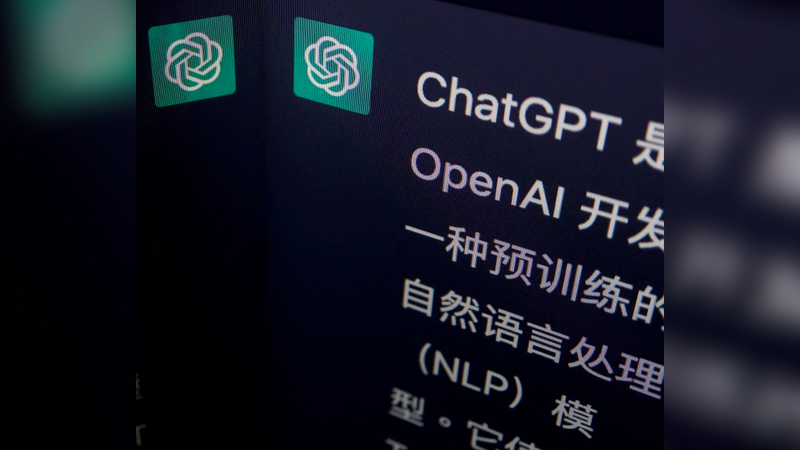
The great advances in AI technologies have led its users to use it to provide radical solutions to many life issues, including diseases and epidemics, with some resorting to using ChatGPT technology to diagnose and treat diseases, rather than doctors, while experts warn of this step, the lack of artificial intelligence for many details about the patient, and thus may give him misdiagnosis, and conflicting medical prescriptions that could threaten his life.
Users of ChatGPT technology told Emarat Al Youm that they use it to diagnose certain diseases by asking about the symptoms they feel, then asking about the proposed medications, asserting that they are in a state of fear and confusion from taking medications that may be wrong and random by the program.
Doctors stressed the need to rely on a doctor who is skilled in diagnosing and treating diseases, especially emergencies, dangerous and chronic diseases, where the patient undergoes clinical examination, diagnosis is linked to accurate medical tests and analyses, and then prescribes medicines that suit the patient's condition, without interfering with other medicines.
Specifically, ChatGPT users, including Abdulaziz, Ehab Muhammad, Ahmed Abdul Maathai, and Mohamed Jaber, reported that they resorted to the use of innovative technology in the treatment process by asking about the symptoms they experienced, then the best drugs for treatment, and were surprised by the technology's enormous amount of information, but reliance on it remains a matter of concern and distrust, demanding that doctors and specialists explain its potential for diagnosis and treatment of diseases.
A cancer consultant at the University of Sharjah, Professor Hamid bin Harmal al-Shamsi, said that although ChatGPT and AI technologies are generally useful in providing information and data at a very fast pace, they cannot be relied upon in diagnosing and treating diseases, as they cannot link clinical information that a doctor finds himself, diagnosing the disease and its treatment, as well as being unable to determine the patient's psychological dimension, which is considered one of the basics of treatment.
Al-Shamsi stressed that many diseases are intertwined and require a lot of rigorous scientific examination to be discovered and diagnosed, whereas these results cannot be obtained by simply asking an AI question.
He went on to say, "The biggest risk of relying on AI in diagnosis and treatment is that it can give a wrong diagnosis, and then a treatment that could threaten the patient's health and deteriorate rather than help treat it".
He pointed out that at the same time there is no denying the benefits of AI in the development of diagnosis and treatment, as it has greatly helped doctors develop treatment programs, as well as enhancing the role of medical devices and means in giving much more accurate and faster results.
In turn, family and occupational health consultant Dr. Mansour Anwar Habib reported that "ChatGPT" technology could help provide a tremendous amount of information about various diseases, and it could also offer treatments easily, but the patient would have to go to a specialist doctor to feel reassured about the treatment process, pointing out that artificial intelligence lacks the patient's medical history, and therefore its diagnosis and treatment is inaccurate.
He added: "The patient's suffering using ChatGPT from other diseases makes him need special treatment prescriptions that suit his condition, which cannot be relied upon by this technique, where solutions are put forward without knowing how well they fit the patient's condition".
He said that ChatGPT technology can be relied upon in treating simple diseases, such as colds, high temperatures and other non-hazardous diseases, without relying on it in treating chronic and dangerous diseases.
For his part, the consultant for internal cardiology in Dubai, Dr. Ahmed Assayed, warned against adopting ChatGPT in the treatment process in general, pointing out that these technologies are still in the development stage, and their information and potential are still very limited, requiring the question to be addressed accurately and correctly, so that the patient gets the right answer, and AI technologies lack this feature.
He added: "Medicine relies heavily on the patient's narrative for details of his condition, patient history, and clinical examination, to give appropriate medication, after the disease is confirmed and accurately diagnosed".
He pointed out that the technology can be adopted as a reference for doctors and specialists, where the treatment process is limited to the doctor only.
He stressed the need not to take any medication without a prescription from the therapist, where AI may suggest medications that conflict with the patient's condition, then threaten his life, and lead to deterioration of his health rather than treatment.
Cybersecurity expert Sami A Nour said that before using ChatGPT in diagnosis and treatment, you have to understand how it works first. It's based on machine learning and deep learning, and its advantage is that it connects closest to human thinking and conversation as a language processing tool, and all of its responses are based on two things, firstly, how much data you learn, and the effective model. Each model has different uses, some better for human interaction, others better for language verification. And it can't be used in one category.
He continued: "Let's say (ChatGPT) is trained to take the position of a doctor or a person and interact on this basis by training on how much huge medical data is stored, and here comes the importance of the second thing, which is the language of speech, and how to communicate with the tool, and how much information we give it, and the way to explain it. Since the language of programming speech is beyond understanding human emotions, responses are based on the logic of what the tool knows, and what the person expresses when talking to it".
He said that concerns about the use of "ChatGPT" in medicine so far have been overshadowed by privacy violations, because all the data contained in it is collected, and confidentiality of this data may be revealed and linked to the person who asked the question, while the medical profession requires maintaining privacy and confidentiality according to the highest standards of information security and professional integrity, and medical transactions undergo administrative procedures through which the patient understands what he has and what he is like, but communicating with "ChatGPT" is just one of those things. The difference is that ChatGPT gives specific information based on the course of a conversation, whereas when you search Google, you search and investigate, you judge your mind, and sometimes your heart.
Sami A Nour noted that ChatGPT is updated only periodically, so it cannot help diagnose conditions arising in real time, seasonal issues or the latest developments. Valuable medical resources may also be restricted to major institutions that ChatGPT cannot access. Doctors conduct numerous examinations—including clinical and physical examinations, imaging and blood tests—that are essential to an accurate diagnosis, although some people underestimate their importance. That's because the consequences of a misdiagnosis scare any doctor, but ChatGPT has no responsibility whatsoever on this subject, it transmits answers based on a search algorithm application, and they may not be correct, so individuals should not use the technology for personal use.
He confirmed that ChatGPT passed the medical exam with a high score, but this is limited to clarifying the questions and explaining them theoretically, but in fact the responsibility for diagnosis, analysis and discovery lies with the doctor and the tools to assist him, which enable him to access the diagnosis, and not provide him with ready data, as has been experimented on ChatGPT, but in the future, ChatGPT can be regulated to benefit the medical staff, after being integrated with diagnostic devices, And I think that for it to be successful, it has to be linked to the patient's history, his family history, the measurement of the atmosphere around him, the emission factor, and other useful information that will be somewhat close to the result, but relying on it without linking it to effective data won't come with a very accurate result, and it could be a blur and another blur.
• Doctors: Artificial intelligence cannot link clinical information with diagnosis and treatment.
• Users asked experts to explain the possibility of adopting a diagnosis and treatment of ChatGPT.
Accurate readings for the X-rays .
Cybersecurity expert Sami A Nour pointed out that the technology is useful for use by specialists, as ChatGPT helps in accurate reading of X-rays, ultrasounds, and MRI, and it draws attention to precise observations that the naked eye may be unable to see, either for poor vision, or for the sharpness of details, or for falling short, and here ChatGPT is useful in processing and reading them.
Source: Emarat Al Youm