
Parents Use Teams to Monitor Their Children During In-Person Lessons
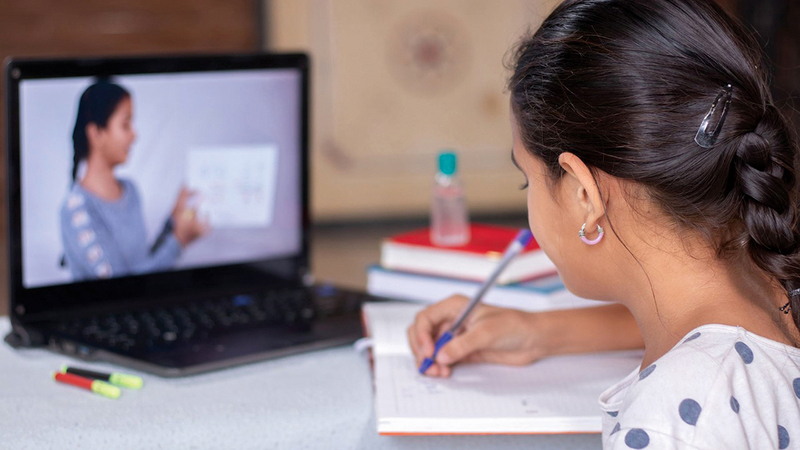
Teachers at public and private schools complained that some parents were using Microsoft Teams to join their children’s in-person lessons and monitor their academic performance in the classroom.
They said these cases are recurring all the time, but most of them target children in kindergarten and elementary school more than other stages.
They confirmed that they had to speak to the students inside the classroom, asking them not to enter the platform during class. They explained that the presence of parents on the platform prevents them from interacting with students who receive their education remotely, and prevents them from giving their right to explain during the school day.
Members of the Federal National Council reported that "the authority authorized to monitor a teacher while teaching is the school administration". They considered the student's presence on the platform "unacceptable behavior".
An information technology expert confirmed that "instructions not to be entered by the guardian while the child receives attendance education are in the hands of the management, or the supervisor at the educational stage", pointing out that an end can be made.
In detail, classes have been organized since the beginning of this week, after announcing the return of schooling in the state to the urban education system in two groups, the first starting this weekend, and the second group returning at the end.
The first group included kindergarten students, first-grade students, twelfth or thirteenth graders – of the British Order, students who will take international and master's exams, as well as students from higher education institutions, while the second group will include the rest of the students.
An English teacher at a government school in Fujairah, Qasa Muhammad, said that the decision to attend had a positive impact on parents and students, but students' parents regained their seats, continuing to enter the Times platform to see what was going on in the class during the school day.
She pointed out that the behaviour "may be well-intentioned, which is to know the lessons given to the student during the school day, to review them, and solve their own homework, but the responsibility of the guardian begins after the end of the school day. And the students have to trust the teacher completely, without watching him or catching his mistakes".
A teacher at a private school in Sharjah, Reem Mohammed, said that she had to prevent students who were attending school from using smart devices and accessing the Times platform, so that they could distinguish students "from distance", and give them their right to interact and understand lessons.
She added that she was surprised to see students coming in to receive live instruction through the "Excellence" platform, and staying through the lesson, which made her ask them out, so she could effectively explain the material to the distance learning students.
The member of the Federal National Council, Sabrin Hassan Al-Yamahi, pointed out that "monitoring the instructor during class while his children are in attendance is incorrect behaviour, because the instructor may judge situations that occur during class without knowledge and awareness of the educational and educational foundations followed", noting that "the authority authorized to monitor the teacher during class is the school administration, According to the provisions and foundations of the Ministry of Education and Training and the UAE Institute of School Education".
"The role of the guardian during his son's attendance education begins after he receives it at the end of the school day, not during it. It is Cooley's right to ask the teacher if his son is physically or mentally injured, or if he needs to clarify some lessons that the student has not understood", noting that "parents have been complaining in the past about time constraints and difficulty in receiving distance education. And when we gave their children the opportunity to go back to preschool, they started watching the teacher instead of giving him the full confidence to create a conscious, independent generation".
She was endorsed by the member of the Federal National Council, Shaheed Saeed al-Nugabi, who reported that "the experience of distance education, imposed by the coronavirus pandemic during the last two years, has given the guardian additional roles, most notably controlling the son during classes, and monitoring him during the school day remotely, creating a new responsibility for them".
She said, "The justification for attending classes while their children are in school may be their caution, or based on the habits they've gained during the previous experience".
She stressed that "the Ministry of Education and the UAE Institute of School Education have chosen teachers carefully, tested and selected their qualifications for this profession. And the guardian has to give the teacher full authority, high confidence, it's not right to have two captains on one ship".
She pointed out that "kindergarten and primary school students are young, they are not fully aware of their behaviour, and mistakes must be made, and this is where the role of the teacher in teaching and guiding them through certified parenting methods, and supervision from the school administration", stressing that "the hybrid education imposed by the coronavirus pandemic does not follow a steady course. And the guardian has to be more flexible with the education system and the teacher, especially since the challenges these generations face are different from the challenges of our generation".
Additionally, information technology expert Sami A Nour said that the digital transformation imposed evolution on all institutions in their various sectors, and on all individuals, regardless of their educational level, or age group, including parents, adding that there was a strong bond that existed during the last two years between the student and his guardian during his school education, as he knew both small and large, occurring while the son received "remote" education. He helped him with homework and projects, and encouraged him to interact during classes, which was hard for him to completely separate from while he was attending school.
He confirmed that he sees that the guardian would have liked to be so close to his sons while they were at school. And modern technology has made it possible.
Sami A Nour finds that instructions not to enter the guardian while the son receives attendance education are in the hands of the administration, or the supervisor at the educational stage.
He went on to say that schools in some countries allow the guardian to follow his son while he is at school through a system of education that is regulated, studied and organized in a certain way, respecting the space of the teacher and guardian, and preserving the rights of the student.
• "The role of a guardian as his son receives formal education begins after he receives it at the end of the school day.
Source: Emarat Al Youm