

Fraudsters Pose as Friends to Target Victims Through Video Calls
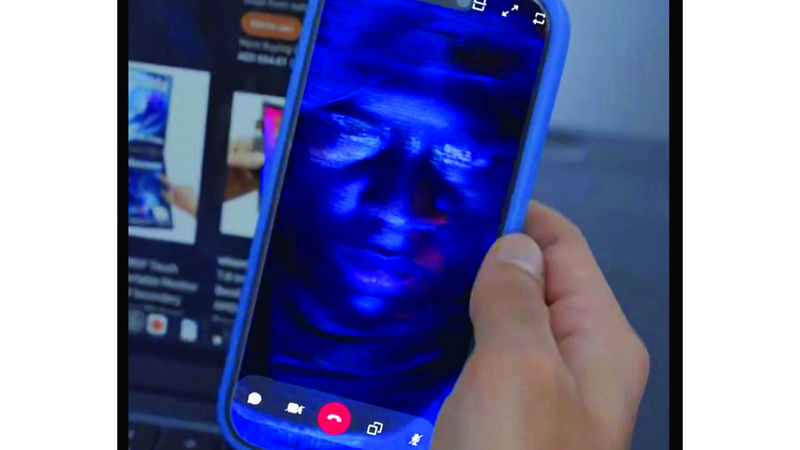
The Cybersecurity Council of the Government of the UAE warned individuals against falling victim to fraud conducted through artificial intelligence technologies, as one of the scammers may take the identity of an acquaintance or relative, falsify his voice and image and conduct a video call with them over the phone, in order to request money transfer, and warned the Council that artificial intelligence, a tool that can be used to embezzle and defraud others, They urge individuals to verify who they contact, and pay attention to the techniques that scammers use to mislead and deceive them, as these techniques are aimed at gaining their trust quickly, prompting them to make unsafe decisions, such as financial transfers or sharing sensitive information.
The council posted on its X-site an informal video clip showing a person receiving a video call on his phone from someone who already appears to be one of their friends they know, asking them to transfer money to him urgently and for an emergency, but he quickly realizes that there is a difference in the tone of his voice, which makes him doubt that what he's doing is not his real friend, but a con man trying to steal his money.
For his part, cybersecurity expert Sami A Nour emphasized that the technology of voice and image counterfeiting is no longer a crime in itself, but how it is used is what determines its legal use, it is no longer a matter for professionals and professionals, nor for production companies and stakeholders, but rather it has become widely available and has many uses, such as advertising, entertainment, and the content industry, and no doubt there are those who rarely use it in scams.
Sami A Nour told "Emarat Al Youm": "There are two uses for the process of counterfeiting in fraud, first through communication and asking for help, by transferring money or sending a credit card, and this trick is still working, maybe it's 10 years old, and it's through the theft of WhatsApp accounts and the development that has now occurred is that the scammer downloads voicemails to someone, and then uses them with artificial intelligence to produce a similar sound, and the second is fake ads. We see it sometimes in the country and abroad, like fake ads promoting investments in the shares of well-known companies, and whoever lives inside the UAE will of course realize that it's fraud, and people rarely fall victim to this kind of fraud in some Arab countries, and it shows this kind of fraud in fake investment campaigns and stock purchases and certain products".
And he saw that in both cases, the two tricks didn't work in our Arab environment, first because they weren't two minutes as well as they should have been in Arabic, especially with multilingualism, because AI hasn't mastered dialects yet, and the scammer doesn't know what accent the person is taking, and even within the UAE, dialects vary between regions and tribes. Also, to create sound successfully, it takes a lot of audio models for AI to train on, and that applies to videos as well. Either you upload an extended video recording, or you install a face on the character, and the latter, of course, won't work. This could only happen to the content makers, who are the real spectators of counterfeiting, and the techniques that can work on families and unknown people are manual techniques at film production companies. And scammers don't have that potential right now.
He explained that to protect ourselves from this expected trick, we have to go back to its roots, which is personalization in the WhatsApp app as a whole, and not focus on developments, like artificial intelligence, which people will undoubtedly notice and warn of this problem, but we have to be wary generally of the possibility of stealing WhatsApp from the other party, and we always have to make sure before we connect, especially if we notice a sudden change in style, unusual sudden requests, We just have to call the other party, and not rush to act.
The Cybersecurity Council has launched awareness-raising campaigns over the past period, warning against believing content produced by deepfake technology backed by artificial intelligence, that it produces content very close to reality.
The council stressed that to combat this, developments must be monitored, information sources verified, manipulation detection skills developed, and awareness of the dangers of these technologies, which is essential to protect against fake news and misinformation.
"Cybersecurity".
• The techniques used by scammers to mislead and deceive individuals are designed to quickly gain their trust and induce them to make unsafe decisions.
Sami A Nour:
• A scammer can use someone's voice messages to produce a sound similar to artificial intelligence.
Source: Emarat Al Youm